
Why learning a language through culture, not just grammar, is the key to fluency
For generations, the blueprint for language learning has been remarkably consistent: a textbook, a list of vocabulary, and the formidable scaffold of grammar rules. Students diligently memorize verb conjugations, struggle with case systems, and fill in countless worksheets. Yet, so many emerge from this process able to construct a sentence, but utterly unable to connect with a native speaker. They possess the bones of the language, but none of its soul. The missing ingredient, the vital spark that transforms a mechanical exercise into a living skill, is culture.
Language is not a self-contained code that can be cracked through logic alone. It is a cultural artifact, born from the history, values, humor, and collective consciousness of its people. To learn a language through culture is to shift the goal from mere accuracy to genuine understanding. It is the difference between knowing the words for “I am fine” and understanding the subtle, unspoken etiquette of when to say it, how to say it, and what it truly conveys in a given context.
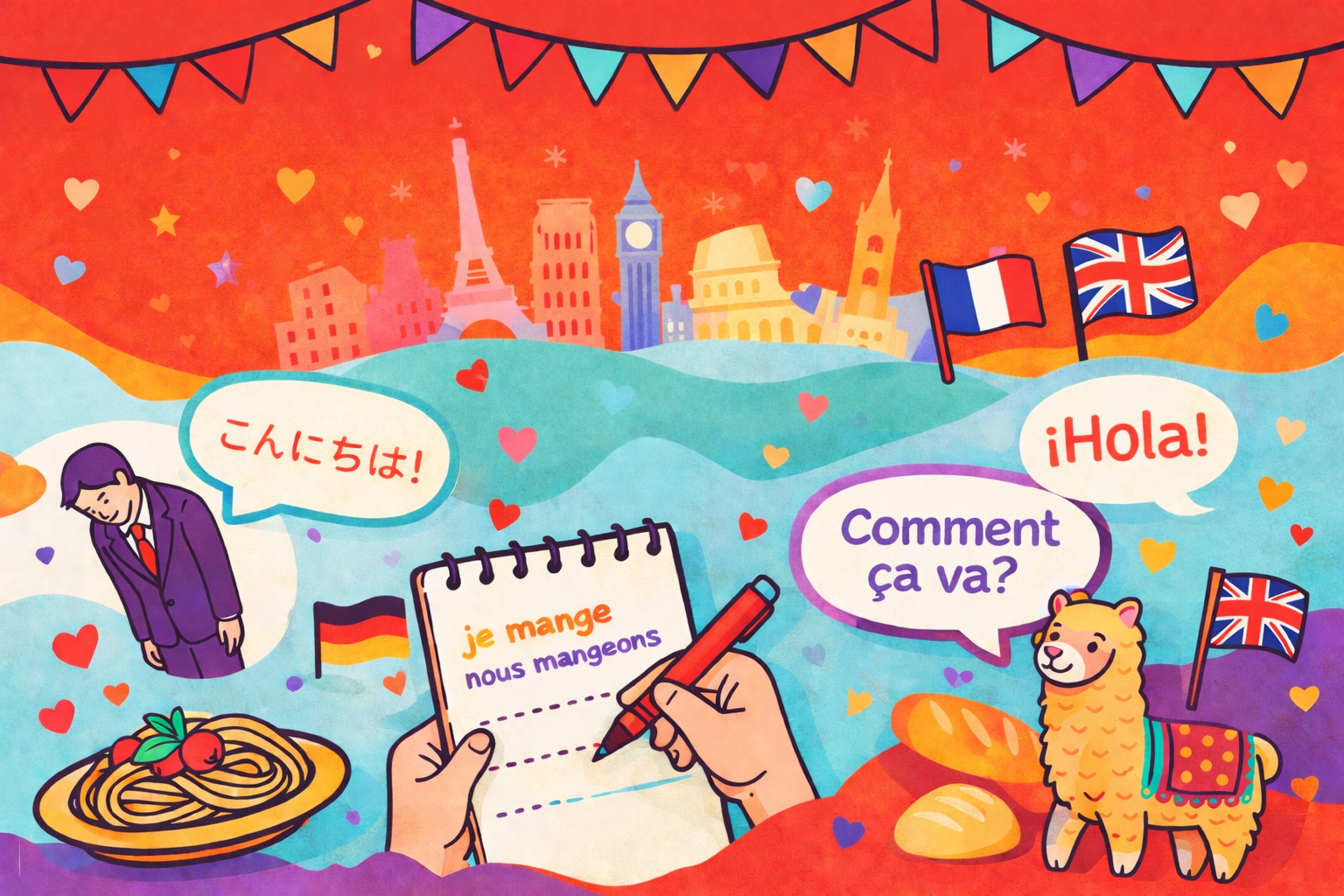
Consider the simple act of greeting. A grammar-translation approach teaches you the phrase “How are you?” (¿Cómo estás? / Comment ça va? / Wie geht’s?). A culture-focused approach reveals that in Spain, this might lead to a genuine brief update on one’s life, while in the United States, it is often a ritualistic greeting requiring no real answer. In Japan, the entire concept is replaced by a complex system of bows and honorifics that communicate respect and social standing without a direct translation. Grammar gives you the “what,” but culture gives you the “why,” “when,” and “with whom.”
This cultural immersion makes the language stick. Memorizing a list of food vocabulary is a tedious task. But watching a vibrant Italian film where a family argues passionately over a recipe for ragù embeds words like aglio (garlic), pomodoro (tomato), and amore (love) in a rich sensory context. The words are no longer abstract; they are tied to the clatter of pots, the warmth of a kitchen, and the emotional weight of a shared meal. You are not just learning the word for “bread” (pain in French); you are learning about the sacred daily ritual of buying a fresh baguette from the boulangerie. This emotional and narrative connection creates neural pathways that are far more durable than those formed by rote memorization.
Furthermore, culture unlocks the humor and personality of a language. Humor is often the final frontier for a language learner because it is so deeply rooted in cultural nuance, wordplay, and shared context. The dry, self-deprecating wit of British comedy, the absurdist sketches in Japanese television, and the rapid-fire double entendres of Argentine Spanish are impossible to appreciate without understanding the cultural soil from which they grew. By engaging with music, films, and comedy, you stop trying to “solve” the language and start feeling it. You learn the rhythm, the cadence, and the unspoken rules that govern a playful exchange.
The benefits extend beyond fluency to fostering profound empathy and cross-cultural competence. Language is a lens through which a culture views the world. The existence of multiple words for “love” in Greek (agape, eros, philia, storge) or the intricate terms for specific types of rain and light in Japanese, reveal what a society deems important enough to name precisely. By learning these concepts, you are not just expanding your vocabulary; you are adopting a new way of seeing and categorizing human experience. You begin to understand the collectivist values embedded the uniquely Danish concept of hygge, which conveys a specific kind of cozy contentment. This process breaks down ethnocentric barriers and allows for a more nuanced, respectful view of the world.
So, how does one implement a culture-first approach? The modern learner has an embarrassment of riches at their fingertips.
- Consume Authentic Media: Ditch the sterile textbook dialogues. Watch contemporary films and TV shows with target-language subtitles. Listen to popular music and read the lyrics. Follow social media influencers from the target country. This exposes you to current slang, natural pacing, and the topics that are actually relevant to native speakers.
- Engage with the Arts and History: Read folktales, poetry, and short stories. Explore the nation’s history. Understanding a country’s pivotal moments (its revolutions, its hardships, its triumphs) provides essential context for its idioms, national character, and even its political discourse.
- Connect with People: Use language exchange apps not as a grammar drill, but as a cultural exchange. Ask your conversation partner about their traditions, their favorite holidays, their family customs, and what makes them laugh. Food is a universal gateway; learn to cook a traditional dish and the vocabulary that comes with it.
- Reframe Your Goals: Instead of aiming to “master the subjunctive mood,” set a goal to “understand the jokes in my favorite Spanish sitcom” or “be able to follow a recipe in French.”
This is not to say that grammar is unimportant. It is the essential skeleton that gives a language its structure. But without the flesh and blood of culture, that skeleton is inert. It cannot dance, sing, or tell a story. It cannot make a friend or fall in love.
True fluency is not the absence of grammatical errors; it is the ability to navigate the invisible currents of meaning that flow beneath the words. It is the confidence to step beyond the textbook and into the vibrant, messy, and beautiful reality of human connection. By embracing culture as your primary textbook, you stop being a student of a language and start becoming a participant in a world.
References
https://tllg.unisa.edu.au/uploads/1/2/7/6/127656642/gllt_ch2.pdf