
Language Awareness: A European Approach to Opening the World to Children
A Shared European Vision
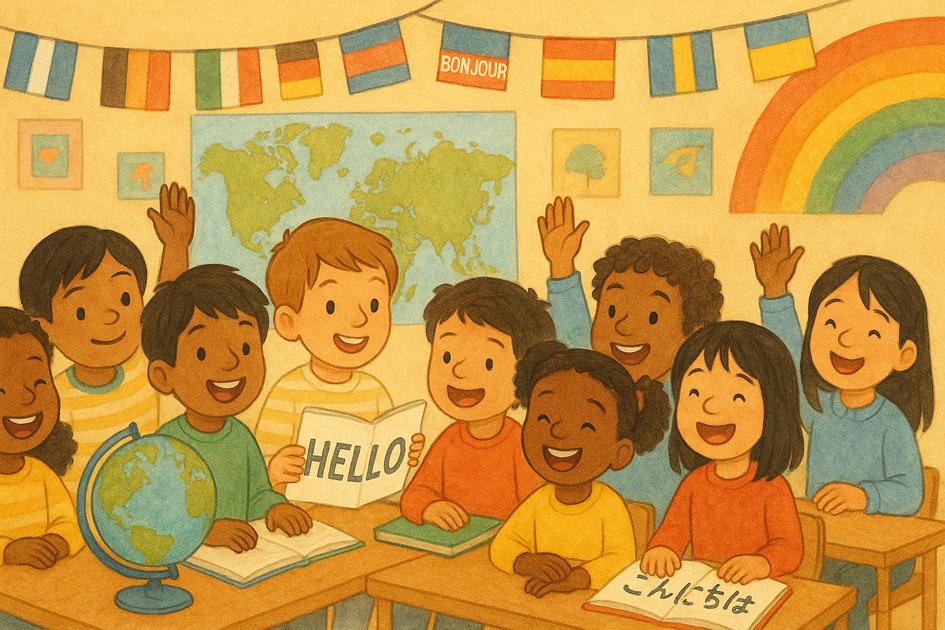
Language Awareness is a playful, inclusive and global approach that invites children, from kindergarten onwards, to discover the linguistic and cultural richness that surrounds them.
It develops listening skills, curiosity, tolerance and cooperation, while transmitting strong values of respect and inclusion.
Its goal is not to teach a single language, but to offer a journey of discovery that plants the seeds of confidence and the joy of learning from an early age.
A Strong European Foundation
Born in the United Kingdom in the 1980s thanks to Eric Hawkins, Language Awareness spread throughout Europe through programs such as EVLANG.
Today, this initiative is integrated into several educational systems, notably in French-speaking Belgium, where kindergarten and early primary teachers devote 50 minutes per week to it.
The European Union encourages this dynamic, recognizing multilingualism as a key competence for education, citizenship and cultural cohesion.
The Main Benefits of Language Awareness
- 🧠 Stimulates the brain and strengthens cognitive flexibility.
- 🌍 Reinforces cultural identity and respect for diversity.
- 💬 Improves communication and listening skills.
- 💪 Builds confidence and joy in learning.
- 💡 Encourages creativity and critical thinking.
- 🤗 Cultivates citizenship and inclusion values.
These positive effects make Language Awareness a powerful driving force for helping young learners become open, cooperative and globally-minded citizens.
A Challenge for Teachers
Implementing this approach remains demanding, especially with the youngest learners. Many teachers express a need for support and training:
“I do it because it’s required, but I don’t feel comfortable teaching something I don’t master.”
“I’m afraid of making mistakes and passing on wrong information.”
“I don’t feel sufficiently trained or equipped to do it.”
The aim is therefore to reassure and support teachers through concrete, accessible tools: playful materials, adapted resources and practical training. These elements allow them to make languages come alive: joyful, meaningful and engaging for children.
The Role of the European Project GLOBETROTTERS
It is within this perspective that GLOBETROTTERS, Erasmus+ project, was created to support teachers and their pupils.
It offers ready-to-use tools, educational resources and training opportunities to explore languages and cultures with enthusiasm.
Language Awareness is a shared European adventure, founded on curiosity, joy and cooperation.