
Giving Meaning to Learning: A Key for Children’s Language Learning
Learning a language… but why?
In a Europe rich in linguistic and cultural diversity, learning to communicate with others has become essential. Yet many children quickly feel discouraged or lose motivation when learning languages. This raises a simple but important question: how can we encourage them to engage in language learning in a lasting way?
Meaning matters: when learning becomes concrete
One important answer lies in the meaning given to learning activities. When children understand why they are learning a language and how it can be useful in real life, their motivation changes. They no longer see the language as an abstract school subject, but as a tool to act, play and interact with others.
What neuroscience tells us
Research in neuroscience confirms this perspective. The brain learns more effectively when it perceives a clear and useful goal. Positive emotions, repeated exposure in varied contexts and active involvement all support memory and retention. In other words, learning becomes more meaningful when it is experienced rather than simply studied.
Learning in real-life situations: the example of the Globetrotters project
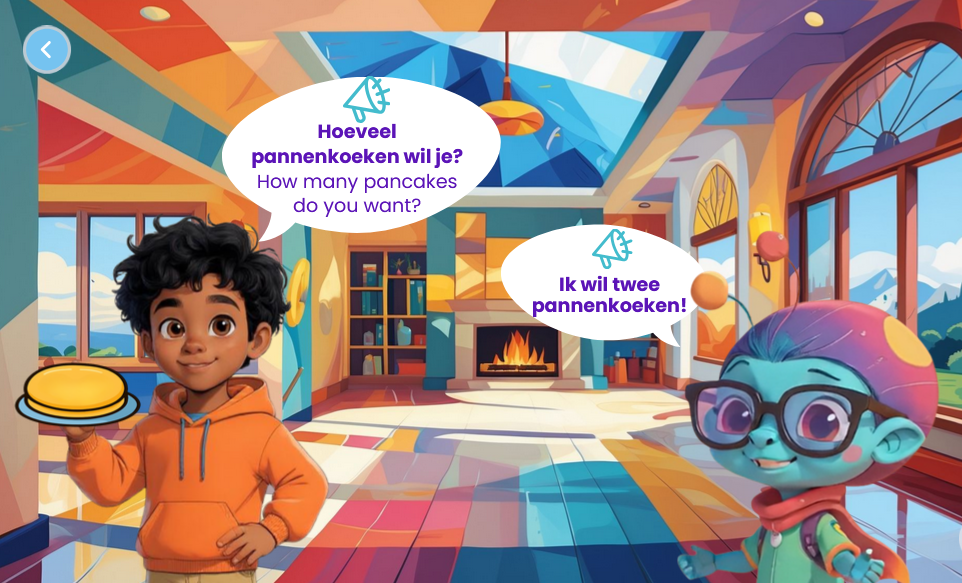
This approach is at the heart of the European Globetrotters project. Children discover languages through situations that are close to their everyday lives: role-playing how to order food in a restaurant, singing traditional songs, greeting a new friend, taking part in group games at the park, cooking at home or having fun at the sports center or even in a museum.
These simple and concrete activities allow pupils to use the language for real communication. They help build confidence, reduce the fear of making mistakes and encourage active participation.
Preparing tomorrow’s European citizens
Giving meaning to language learning does not solve every challenge, but it is a powerful lever to support motivation and build solid foundations. In a Europe where cultural exchanges are constantly increasing, offering lively and meaningful learning experiences helps prepare children to become open-minded, curious and able to cooperate beyond borders.
Sources :
- Immordino-Yang, M. H. & Damasio, A. (2007). We feel, therefore we learn: The relevance of affective and social neuroscience to education. Mind, Brain and Education.
- Schultz, W. (2015). Neuronal Reward and Decision Signals. Neuron.