
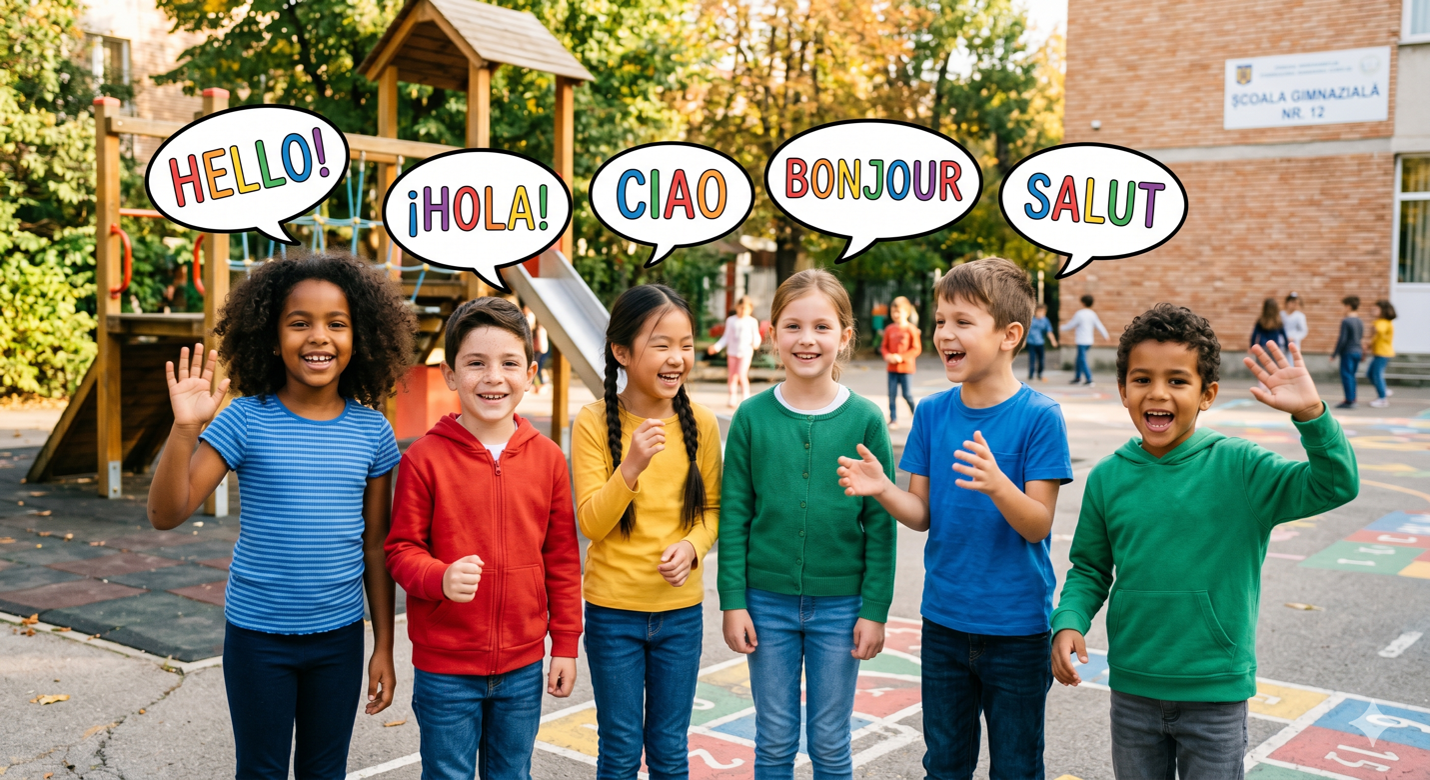
Why Knowing “Hello” in 10 European Languages is Your Secret Weapon
Look, you don’t need to be a professor or a spy. But if you travel around Europe, from a beach in Spain to a bar in Berlin to a ski slope in Poland, knowing how to say a simple “Hello” in the local language is basically a superpower. It costs you almost nothing, but it changes everything.
Let’s be real: English gets you far in Europe. But English *alone* keeps you on the outside. You’ll get your coffee, but you won’t get the smile. You’ll get your train ticket, but you won’t get the local tip about the good restaurant. When you walk into a shop in Paris and say “*Bonjour*” instead of just “Hi,” you stop being a tourist. You become a another person. That’s the superpower.
Here’s what actually happens when you say “Hola” in Madrid or “Ciao” in Milan:
- People relax. You’ve shown you’re not arrogant. You tried. That’s 90% of the battle.
- They help you more. A friendly “Grüß Gott” (Austria/Bavaria) at a market stall? The seller will throw in an extra apple.
- You feel braver. Once you’ve said hello in Polish (“Dzień dobry”) and didn’t die of embarrassment, ordering a beer feels easy.
You don’t need grammar. You don’t need verbs. You just need the first two seconds of a conversation. Those two seconds tell the other person: I see you. I respect you. I’m not a rude foreigner.
And let’s be honest, people. A German might switch to perfect English immediately after you say “Hallo,” but they heard you try. A French person might correct your accent, but they will also respect the effort. In Portugal? A simple “Olá” opens doors that stay locked for the guy who just grunts “Two beers.”
It’s not about being fluent. It’s about being friendly. And in a crowded, busy Europe full of tired travelers and stressed locals, being the friendly one is a genuine superpower.
OK, so why ten languages? Why not two or three? Because ten covers almost every corner of Europe. Ten means you can go from Lisbon to Warsaw to Athens without ever looking like the clueless foreigner. Ten is the magic number where you stop guessing and start greeting.
Here’s your starter pack for Europe:
– Spanish: Hola
– French: Bonjour
– German: Hallo
– Italian: Ciao
– Portuguese: Olá
– Dutch: Hallo
– Polish: Dzień dobry
– Greek: Yassou
– Swedish: Hej
– Russian: nZdravstvuyte
Now, here’s the real secret: you will mess up the pronunciation. Especially Polish and Russian. And that’s fine. Actually, it’s better than fine. When you try and fail, you look human. People laugh with you, not at you. Then they teach you the right way. And suddenly you’re not a customer anymore, you’re a guy having a nice moment with a local.
This superpower works when you’re tired, lost, or grumpy. Had a horrible flight? Your luggage is lost? You’re standing in a rainy Berlin street? Just find one person, say “Hallo,” and watch what happens. The world softens. Because nobody is mean to someone who made the tiny effort to learn “hello” in their language.
In the end, ten hellos won’t make you a diplomat. But they will make you the person who gets the better table, the friendly bartender, and the correct directions. In a continent of 40+ languages, being the person who can smile and say “Hej” in Copenhagen or “Yassou” in a Greek taverna? That’s not academic. That’s just smart travel. And that’s a superpower you can learn this and maybe teach to your students.