
What friendly aliens can teach us about European multilingualism
Seeing Europe through someone else’s eyes (even if they have three)
Imagine you’ve just landed on Earth. You have no idea that French is “romantic,” that German is “hard,” or that some accent is “prettier” than another. You just hear sounds, fascinating, strange, wonderful sounds, attached to real people doing real things.
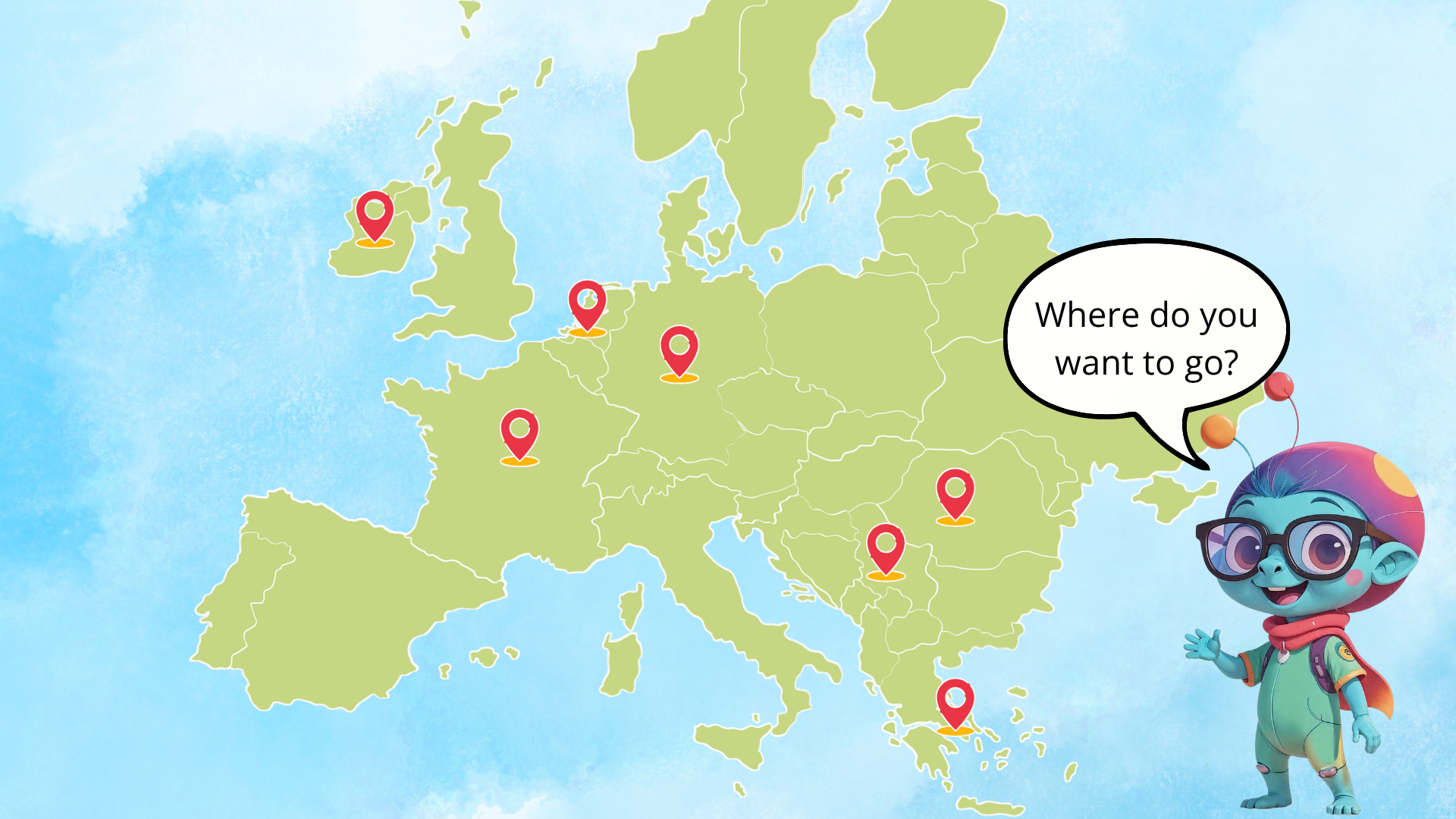
That’s the entire premise of the Globbytrotties, the Globetrotters project’s alien mascots. They arrive on Earth with zero baggage about which languages are “impressive” and which are “for beginners.” And that blank slate turns out to be pedagogical gold.
Because here’s the truth: most language anxiety in children isn’t really about grammar. It’s about judgment. Kids worry their accent sounds silly, that they’ll say the wrong word in front of classmates, that they’ll be “bad at it.” Adults inherited this anxiety too. Most of us are still quietly embarrassed about our accent in the language we learned at school.
Borrowing a persona to borrow some courage
This is where the alien trick works its magic. When a child becomes a Globbytrottie, collecting clues, solving mysteries, exploring a new culture with alien curiosity instead of human self consciousness, the social risk of “sounding wrong” evaporates. Aliens don’t have accents to be embarrassed about. Aliens are the accent.
“Give a child a mask, a puppet, or an alien identity, and you’ll often meet a version of them that is dramatically bolder than the one sitting at their desk.”
Gamified avatars do the same job as a costume: they let children experiment with new sounds, rhythms, and words without it feeling like them on the line. The mistakes become the alien’s mistakes, funny, low stakes, forgettable. The learning, however, sticks.
Beyond flags and postcards
Real intercultural learning isn’t ticking off flags on a poster. It’s noticing the small, human details: the lullaby a Portuguese grandmother hums, the secret handshake style greeting used in a Polish schoolyard, the rhythm of a Greek folk dance, the specific phrase every Belgian household says before dinner. These tiny, textured details are what turn “other countries” into real places with real people, not props in a diversity poster.
The Globbytrotties travel Europe collecting exactly these kinds of everyday treasures: songs, phrases, customs, and rhythms, the stuff that actually builds curiosity instead of stereotype.
Bring the aliens into your classroom
On the Gamified Online Platform, kids join the Globbytrotties on missions across Europe, collecting clues, souvenirs, and new words as they go. For teachers who want to build their own ludified lessons, the Digital Workshop shows how to use tools like Genially to design similar mystery and discovery experiences tailored to your own curriculum.
Your challenge
Bring a Globbytrottie into your next lesson. Let your students borrow an alien’s fearless curiosity for forty five minutes and see what comes out of their mouths. Then download the printable discovery resources and keep the adventure going.
References
MacIntyre, P. D., and Gregersen, T. (2012). Emotions that facilitate language learning: The positive broadening power of the imagination. Studies in Second Language Learning and Teaching, 2(2), 193 to 213.